
Kabaddi Defensive Strategies: How Elite Teams Build Championship Defenses
While raiders generate kabaddi’s most celebrated highlight moments, championship teams are consistently built on defensive cohesion and tactical organization that raiding talent alone cannot replicate. Coordinated defensive formations, practiced tackling techniques, and the collective discipline required to neutralize opposing raiders represent kabaddi’s most underappreciated tactical dimension.
For fans who appreciate defensive tactical analysis across sports — whether studying cricket bowling strategy through platforms like cricbet99 and cricket99 id or exploring kabaddi defensive systems — understanding how elite teams structure their defense reveals the sophisticated collective intelligence behind every successful tackle.
Defensive Positioning: The Seven-Player Formation
Kabaddi’s seven-player defensive formation typically organizes players into specific tactical roles: corner defenders positioned near the boundary lines, cover defenders supporting the central defensive structure, and in some formations, designated all-rounder defenders who can transition flexibly between positions based on the raider’s movement and the match situation.
The specific formation a team deploys depends significantly on the opposing raider’s known tendencies — a raider known for aggressive central attacks might be met with a more compact central defensive structure, while a raider who frequently attempts boundary-line escapes might face reinforced corner defensive positioning. This tactical customization, developed through extensive opponent video analysis, mirrors the bowling field placement strategies that cricket fans following platforms like cricbet99 id and cricbet99 login recognize from their own sport.
The Ankle Hold: Defense’s Most Fundamental Technique
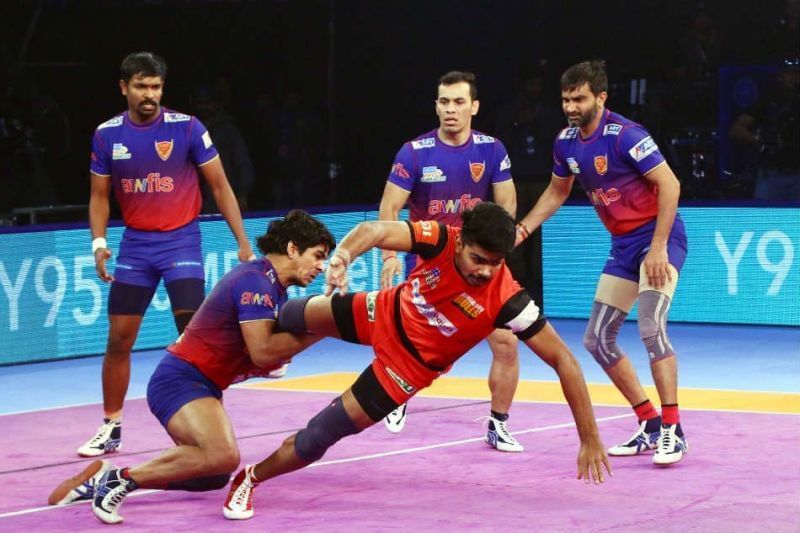
The ankle hold remains kabaddi’s most commonly used and fundamentally important tackling technique. A defender grabs the raider’s ankle or lower leg, using leverage and body weight to prevent forward movement toward the center line. Successful ankle holds require precise timing — grabbing too early allows the raider to anticipate and adjust their movement, while grabbing too late risks missing the opportunity entirely.
Elite defenders develop exceptional anticipation for ankle hold timing, often supported by secondary defenders who provide additional restraining force once the initial hold is established. This coordination between a primary tackler and supporting defenders — converting an individual ankle grab into a secured, multi-defender tackle — represents the collective tactical intelligence that separates championship-caliber defenses from individually talented but uncoordinated units.
The Dash and Block: Coordinated Multi-Defender Tackles
The “dash” technique involves multiple defenders converging rapidly to physically block a raider’s escape path, typically used when a raider has successfully touched a defender and is attempting to return to their own half. Successful dash execution requires precise timing between multiple defenders — arriving too early allows the raider to redirect around the forming block, while arriving too late means the raider has already passed through the intended blocking zone.
This coordinated technique is among the most practiced drills in professional kabaddi training, with teams running extensive repetition exercises to develop the split-second timing required between defenders who must read each other’s positioning and movement intentions without verbal communication during the actual high-speed raid sequence.
The Super Tackle: Defense’s Highest-Value Achievement
A Super Tackle — earning the defending team a bonus point — occurs when three or fewer defenders successfully execute a tackle, reflecting the increased difficulty and skill required when fewer defenders coordinate a successful stop compared to a tackle involving more defensive players. Super Tackles represent defense’s equivalent to a raider’s Super Raid in terms of statistical and tactical significance.
Teams whose defensive systems consistently generate Super Tackles demonstrate superior individual technique and coordination, since executing a successful tackle with reduced defensive numbers requires each involved defender to perform their role with minimal margin for error. Fans tracking team defensive statistics through cricbet online and cricbet99 bonus sports analysis will find Super Tackle frequency among the most predictive indicators of overall defensive quality.
Reading Raiders: Defensive Scouting and Preparation
Professional kabaddi defenses prepare extensively for upcoming opponents by studying video analysis of specific raiders’ tendencies — their preferred touch techniques, typical escape patterns, and historical performance against similar defensive formations. This preparation allows defensive coordinators to design specific tactical approaches tailored to neutralizing an opponent’s most dangerous raiding threats.
Communication during live match play — despite the inherent challenge of coordinating without alerting the raiding opponent to defensive intentions — relies heavily on pre-established signals and practiced formation triggers that defenders execute based on the raider’s observed positioning, rather than verbal real-time instruction that would be audible to the opposing team.
Building Defensive Chemistry Across a Season
Defensive coordination in kabaddi, much like defensive systems in football or basketball that fans following multi-sport platforms like cricbet99 register and cricbet99 app will recognize, depends heavily on sustained playing time together. Teams whose defensive units have trained and competed together across multiple seasons typically demonstrate superior tackle success rates compared to defenses assembled primarily through auction-driven individual talent acquisition without sufficient time to develop coordinated chemistry.
This reality has led successful PKL franchises to prioritize retaining core defensive units across multiple seasons, even when auction strategy might otherwise favor pursuing individually higher-rated defensive talent, recognizing that practiced coordination often outperforms assembled individual quality in kabaddi’s tactically demanding defensive context.
Frequently Asked Questions About Kabaddi Defense
What makes a Super Tackle different from a regular tackle?
A Super Tackle occurs when three or fewer defenders successfully execute a tackle on the raider, earning the defending team a bonus point in recognition of the increased difficulty involved in coordinating a successful stop with reduced defensive numbers compared to standard tackles involving more players.
How do defenders communicate during a raid without alerting the raider?
Defensive teams rely on pre-practiced formation triggers, hand signals established before the match, and reading each other’s body positioning rather than verbal communication, which would alert the raiding opponent to defensive intentions during the live tactical exchange.
Why do some teams prioritize defensive chemistry over individual talent in auctions?
Coordinated defensive tackling requires precise timing between multiple defenders that develops through sustained playing time together. Teams that retain core defensive units across seasons often outperform expensively assembled defenses with less shared tactical experience, leading successful franchises to value continuity alongside raw talent acquisition.
Kabaddi’s defensive tactics represent some of the sport’s most sophisticated collective intelligence, requiring coordination, anticipation, and practiced timing that rivals the tactical complexity found in any major team sport. Championship-caliber teams are built on this defensive foundation as much as individual raiding brilliance. For fans who appreciate tactical depth across sports — whether following cricket field strategy through cricbet99 and cricket99 id or kabaddi defensive systems — understanding these formations and techniques reveals the genuine chess match happening behind every kabaddi raid.