
Why Is SPE Solid Phase Extraction Essential for Cleaner Analytical Samples?
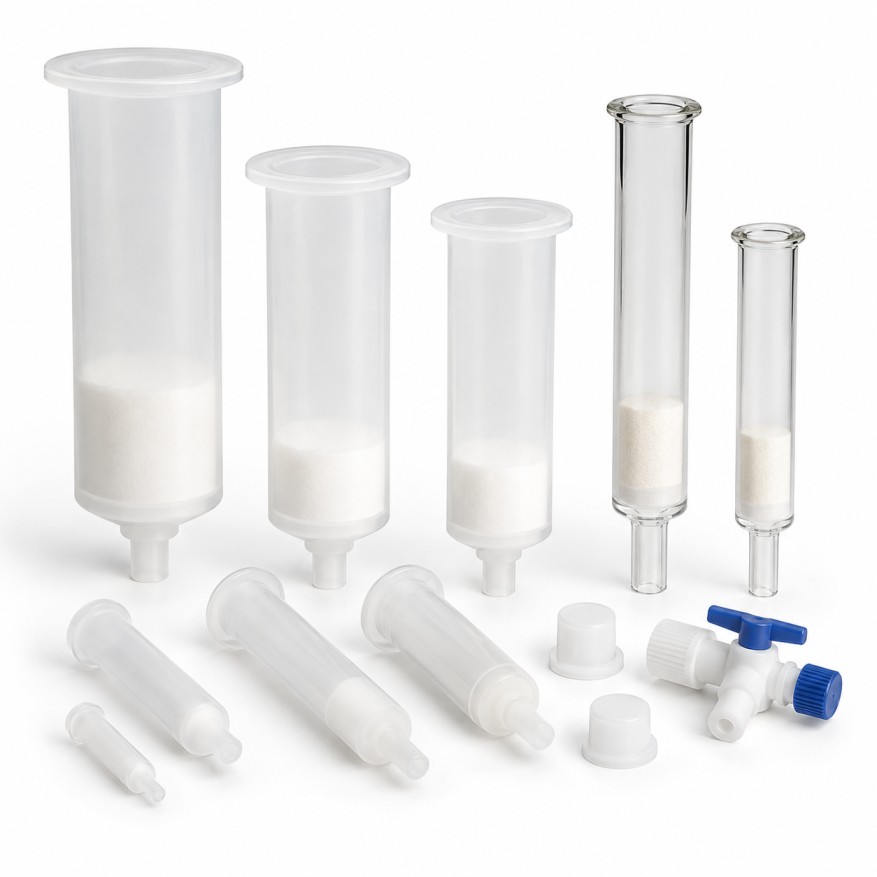
Improving Matrix Removal, Analyte Concentration and Downstream Instrument Performance
Analytical accuracy can be compromised before a sample ever reaches an instrument. SPE Solid Phase Extraction offers laboratories a practical way to prepare complex samples by separating target compounds from unwanted matrix components. Instead of analysing an untreated mixture containing salts, pigments, lipids, proteins or other interfering substances, researchers can use SPE to produce a cleaner extract that is better suited to sensitive chromatographic and analytical techniques.
Why Is Sample Preparation So Important?
Modern analytical instruments are highly sensitive, but sensitivity alone does not guarantee reliable results. A complex sample may contain hundreds of substances in addition to the compounds researchers actually want to measure.
These additional components can interfere with separation, affect detector response or contaminate parts of the analytical system. In some cases, the target analyte may also be present at a very low concentration compared with the surrounding matrix.
Effective sample preparation reduces these problems by simplifying the sample before instrumental analysis.
SPE is valuable because it can combine clean-up and concentration in one workflow. Depending on the method, unwanted substances may be removed while the target analyte is retained, or the reverse strategy may be used.
SPE as a Selective Clean-Up Technique
The main strength of solid phase extraction is selectivity. The extraction material interacts differently with individual compounds according to properties such as polarity, charge and molecular structure.
By selecting suitable conditions, researchers can encourage desired compounds to remain on the sorbent while interfering substances pass through. A later solvent can then release the retained analytes into a cleaner solution.
This approach is useful for environmental testing, pharmaceutical analysis, food testing, chemical research and other applications where the original sample contains substances that could complicate measurement.
The objective is not simply to remove material. The goal is to preserve the compounds of interest while reducing components that do not contribute useful analytical information.
Where Do Syringe Filters Fit Into Sample Preparation?
SPE removes compounds according to chemical interactions, but some samples may also contain suspended particles that should be removed before analysis.
Syringe Filters can complement SPE workflows when particulate filtration is required.
Filtration and solid phase extraction perform different functions. A syringe filter primarily removes particles according to the selected membrane and pore characteristics, while SPE is designed around chemical retention and selective extraction.
In some workflows, filtration may be carried out before SPE to prevent particulate material from obstructing the extraction device. In others, a final filtration step may be useful before transferring the prepared extract to an analytical vial.
How Can SPE Improve Low-Level Analysis?
Some analytical methods need to detect compounds present at very small concentrations. Direct injection of the original sample may not provide enough analyte for a strong detector response.
SPE can help by retaining analytes from a relatively larger sample volume and then releasing them into a smaller volume of solvent.
This concentration effect can improve the practical detectability of selected compounds when the method is carefully optimised.
However, concentration is only beneficial when analyte recovery remains consistent. If significant amounts of the target compound are lost during loading, washing or elution, the final result may become less reliable.
Method development should therefore focus on both cleanliness and recovery.
Why Does Reagent Quality Matter During Extraction?
An SPE workflow may use conditioning solvents, washing solutions, buffers and elution solvents. Each of these materials can potentially introduce contaminants.
For sensitive applications, suitable High Purity Products can help reduce unwanted background contamination during preparation.
This becomes particularly important when laboratories are measuring trace-level compounds. An impurity introduced through a solvent or reagent may appear significant when the intended analyte is present only at a very low concentration.
Purity should therefore be matched to the analytical method rather than considered separately from sample preparation.
What Happens After the SPE Extract Is Prepared?
Once extraction is complete, the cleaned sample must usually be transferred into a suitable container for instrumental analysis.
Autosampler Vials And Sample Bottles can support the transition between sample preparation and automated analytical measurement.
Suitable containers help protect the prepared extract during storage and instrument loading. The vial material, closure and sample volume should be compatible with both the solvent and the analytical system.
Poor vial handling can compromise a carefully prepared sample through evaporation, contamination or incorrect identification, so the transfer stage deserves the same attention as the extraction itself.
Connecting SPE With HPLC Workflows
One of the most common reasons for preparing a clean extract is to improve downstream chromatographic analysis.
Liquid Chromatography (LC, HPLC) can benefit from effective sample preparation because cleaner samples place less unwanted material into the chromatographic system.
Reducing matrix components may help improve peak interpretation and minimise unnecessary contamination of injection paths or analytical columns.
SPE can therefore be viewed as part of the chromatographic workflow rather than an isolated preparation step. The extraction conditions should be developed with the final analytical method in mind.
The elution solvent, for example, should ideally be compatible with the intended chromatographic conditions or be exchanged before analysis.
Key Variables That Influence SPE Performance
Several factors should be controlled when laboratories develop or reproduce an SPE method:
- Sample composition and analyte concentration
- Sorbent capacity
- Sample pH
- Conditioning solvent
- Loading speed
- Washing strength
- Elution solvent and volume
- Final sample concentration
Consistency across these variables is essential when multiple samples need to be compared quantitatively.
A method that performs well for one sample may not automatically provide the same recovery for a different matrix, so validation should reflect the actual application.
Avoiding Common SPE Workflow Problems
Poor recovery can occur when the target analyte does not interact strongly enough with the sorbent or when the washing solvent removes it prematurely.
Incomplete elution creates the opposite problem: the analyte remains on the extraction phase instead of entering the final sample.
Matrix breakthrough may occur when interfering compounds are not adequately retained or removed. Excess sample loading can also exceed the practical capacity of the extraction phase.
These problems can often be investigated systematically by examining each stage separately rather than changing the entire procedure at once.
Building a Complete Sample-Preparation Strategy
Solid phase extraction works best when it is integrated with the rest of the analytical process. Filtration can control particulates, appropriate reagent quality can reduce contamination, SPE can remove chemical interference, and suitable vials can preserve the final extract before instrumental analysis.
This connected approach helps laboratories produce samples that are cleaner, more concentrated and better suited to sensitive analytical methods.
By treating SPE as part of a complete preparation strategy rather than simply another laboratory step, researchers can improve method reproducibility, protect downstream instrumentation and obtain more dependable analytical data from complex samples.